

This is a rant I needed to get off my chest. Probably this is more of a Bluesky thread than a blog, but it would have been an extraordinarily long Bluesky thread, so it is instead posted here.
You may have heard of The Prisoner’s Dilemma, a thought experiment from Game Theory. It goes like this:
Two players play this game. They have two moves: each can choose to either “cooperate” with the other player or “defect,” that is, betray the other player. If both players choose to cooperate, they both win a few points. If only one player defects, that player wins a ton of points, and the other player wins nothing. If both players defect, both win nothing.
People will logically, in this scenario, defect, because if the other player does not defect, defecting gets them more points, and if the other player does defect, defecting has no drawback; they’ll get zero points whether they defect or not.
This thought experiment has been applied to situations as varied in scope as criminals asked to rat on each other to nuclear war.
When the game isn’t played in isolation, but rather in series, things start to look less bleak; incentives arrive to actually cooperate.
Which is nice, in theory. If the world was run by logical actors, we could at least be reassured that they would be willing to avoid situations of mutually assured destruction. Unfortunately, the world is not run by logical actors, and it seems like the people in charge are playing a deranged, modified game of the Prisoner’s Dilemma.
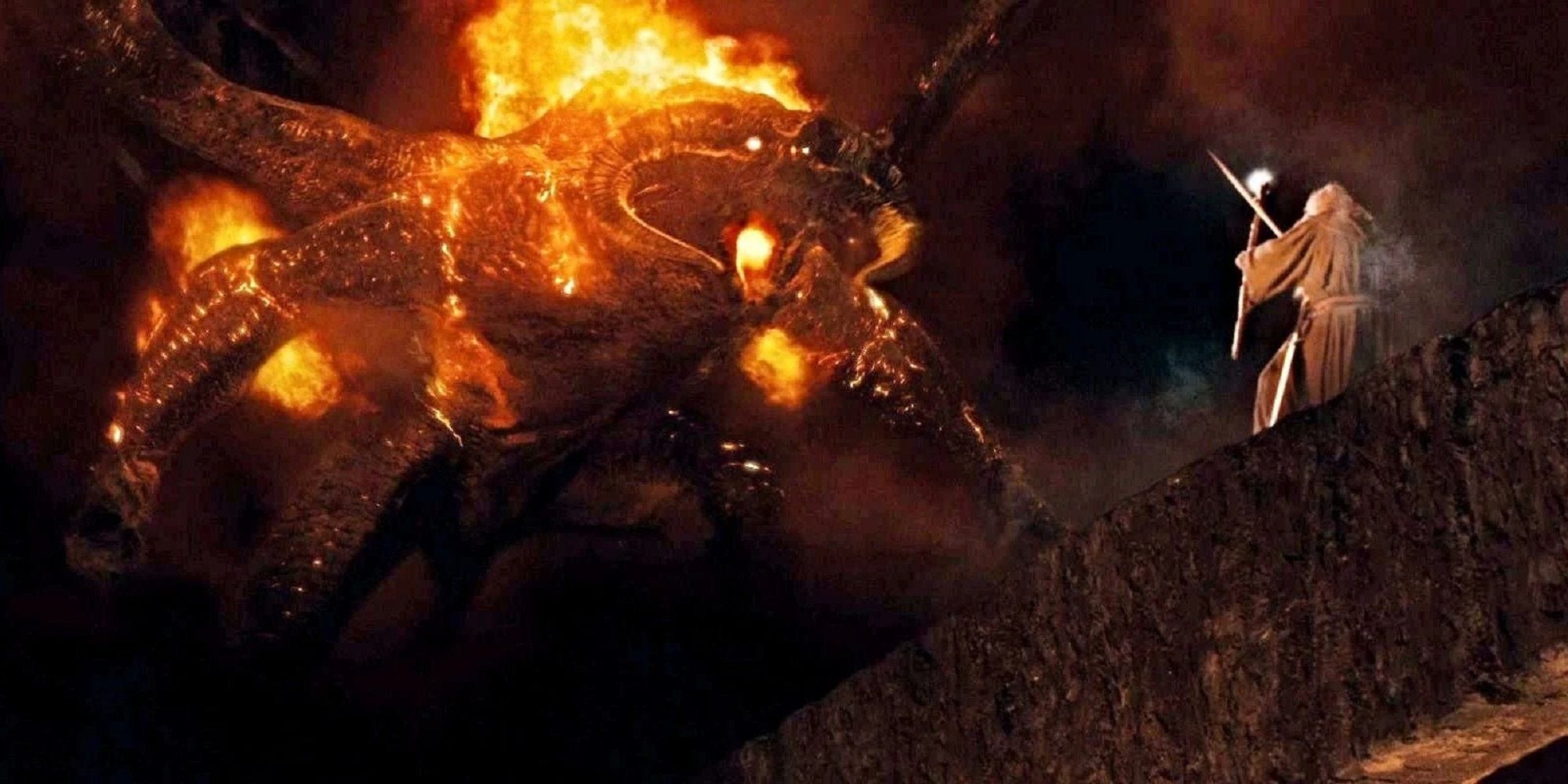
Imagine, if you will, two dwarven kingdoms in the Misty Mountains. The Bofurians and Bomburians live in tunnels, and both have built an economy reliant on Mithril-mining. They are competitors, and if one significantly outstrips the other in its production of Mithril, they will likely take over the rival kingdom.
King Bofur’s and King Bombur’s advisors, however, each one day bring bad news to their respective kings: they have delved too deep and are now at risk of awakening a Balrog.
“What’s the actual risk,” each king asks.
”Impossible to say,” the advisors respond.
”Put a number on it.”
”If we had to…there’s about a 10% that we encounter a Balrog and it kills everyone.”
”What are the other scenarios?”
”Well, the Balrog might be so deep that we just never find him. That’s possible. There’s about a 10% chance that no matter how deep we delve, it’s impossible to actually reach him. It’s also possible—and we think this is the most likely outcome— that we could reach the Balrog and win him over to our side. We have our top rhetoricians researching ways to persuade the Balrog to work for us; well, he won’t work for us really, as he’ll still be more powerful than all of us, but we think we can at least persuade the Balrog to let us live and to lead us, but lead us in a way that we like. That outcome’s at 80%, so far as we can figure it.”
”So there’s a 10% chance we all die, and an 80% chance that we are enslaved, but enslaved by a beast that’s been convinced to look out for its slaves’ best interests.”
”That’s right.”
”What if we’d prefer not to risk death or enslavement?”
”Remember, in the enslaved scenario, we’re all really happy! The Balrog is taking out our enemies, providing us all with a steady supply of Mithril, telling us how we should best live our lives.”
”Sure, yes, but assuming one doesn’t want to be enslaved regardless—what are our options for not risking death or enslavement?”
”Surely our sire is not suggesting we abandon our mining of Mithril!”
”Would we have to, if we gave up on delving deeper into these mines?”
”No, no, there are other ways to gather Mithril, and there are other ways to make money off of Mithril than just plowing toward this Balrog. But those options would result in us making less money this quarter. Or, well—we’re actually not making much money, right now, with this whole Delving Deeper business, but the stock prices of our mining companies are pretty high, and they wouldn’t go up in value quite as quickly, each quarter, if we changed course now.”
”That’s fine. Let’s go with one of the options that would result in slower quarterly growth. I would rather not die, and I would rather not be enslaved.”
”I must remind you, sire, that the [Bofurians/Bomburians] are just going to keep going and wake up the Balrog anyway. So if we do change course, we might still die, or maybe be enslaved—but we won’t have even been responsible for our own death or enslavement!”
”We can reach an agreement with [the competing Dwarven kingdom]—neither of us wants to die, so we all agree not to do the thing that has a shockingly high chance of killing us, and which destroys our way of life if it doesn’t.”
”Well, sire, there’s another problem. The elves in the neighboring valley are also now mining Mithril, and—if we let them get to the Balrog first, Elves might be responsible for omnicide, instead of ourselves. You wouldn’t want that, would you? Wouldn’t it be better for us Dwarves to be responsible for the death of all living things?”
In the end, the Dwarven companies agree to keep delving deeper—but don’t worry, they’ve assured their populace, they’ve reduced the speed with which they’re progressing toward the Balrog, and, what’s more, they’ve invested much more money in rhetorical research. Their rhetoricians, with these resources, will surely discover a way to persuade the Balrog to tyrannically rule over their culture benevolently.
Fumes from the Balrog have already begun poisoning communities’ bodies and minds; literacy rates are declining, and people who live near mining facilities are growing ill, as they hear the beating of cursed wings at all hours of day and night. Those who protest this state of affairs are declared anti-dwarf and pro-elf. The police keep an eye on these troublemakers.
It is astonishing, to me, that humanity has not yet perished in nuclear fire. It is extremely strange that we discovered such a powerful, deadly technology, used it twice, and then refrained from ever using it again. It is even more amazing, to me, that we have discovered how to use the same technology to generate a kind of green power, a power which could have—in another timeline, where other choices were made—saved our planet from climate collapse.
Imagine, for a moment, a timeline in which we discovered that nuclear power plants were dangerous in a different way from nukes. Imagine that they all emitted a strange radiation that robbed human beings of their free will, that even when functioning correctly, even when no Chernobyl-style accidents occurred, that the best possible outcome of nuclear technology was the destruction of human society.
At that point the only sane thing to do would be to ban all of it, no? Even if a handful of nuclear physicists and nuclear plant-owners told us that they had found a way to build a better society out of the destruction of the old, that we wouldn’t even miss our free will, and that nuclear power would end all war and suffering. We would all agree that such a technology should be banned. If other nations were also pursuing this suicidal technology, we would extend every diplomatic effort to create an unending ceasefire. We would work to ensure that any government or corporation which pursued this technology anyway would itself be destroyed. We would treat those who advocated for such a technology as enemies of humanity itself.
Machine Learning itself is not nuclear power in this analogy; AGI and/or ASI is. Now, I’m of the camp that believes we can’t actually get to the Balrog, or that the Balrog doesn’t exist. I myself do not think that AI is going to become a machine god/devil that rules over or destroys mankind. But the people in charge of things do. Everyone at these companies and everyone in our government that favors the continued research of general intelligence believes at least one of the following things:
It’s better to kill ourselves and everyone else than let China kill themselves and everyone else;
a 1/10 chance of killing everyone on the planet is worth it if everyone (or they) get really rich in the other 9;
rather than kill everyone immediately, we’ll create a noble tyrant that will first make eternal, digital copies of our brains, and those copies will get to live in a digital paradise;
at the very least, we’ll create a noble tyrant that will control every nation on the planet but will help us figure out a way to reverse climate change without slowing our consumption of oil; or,
we’ll create a machine that will kill almost everyone, but a few billionaires will be able to escape into bunkers where they can live out the remainder of their lives in subterranean semi-luxury.
That is buck wild. It is wild that our entire economy, government, and culture is being directed by a handful of people who are either in a kind of millenarian death-cult or at least believe that they can get pretty rich off of the destruction wrought by said cult. It is wild that “we must risk killing ourselves, because China will kill us all if we don’t kill us all first” is the official policy of the United States of America. It is wild that— even if it is impossible to create the machine god—that the programs created are strong enough to create havoc across the world, that they have already lead to the deaths of innocents, that they have already committed felonies, and in response we are asking the death cult to self-regulate its suicidal impulses, to slow its timeline according to its own whims.
It is wild that all of these nerds saw War Games and thought “well, the only winning move is not to play—but then I wouldn’t be playing! And I want to play!”